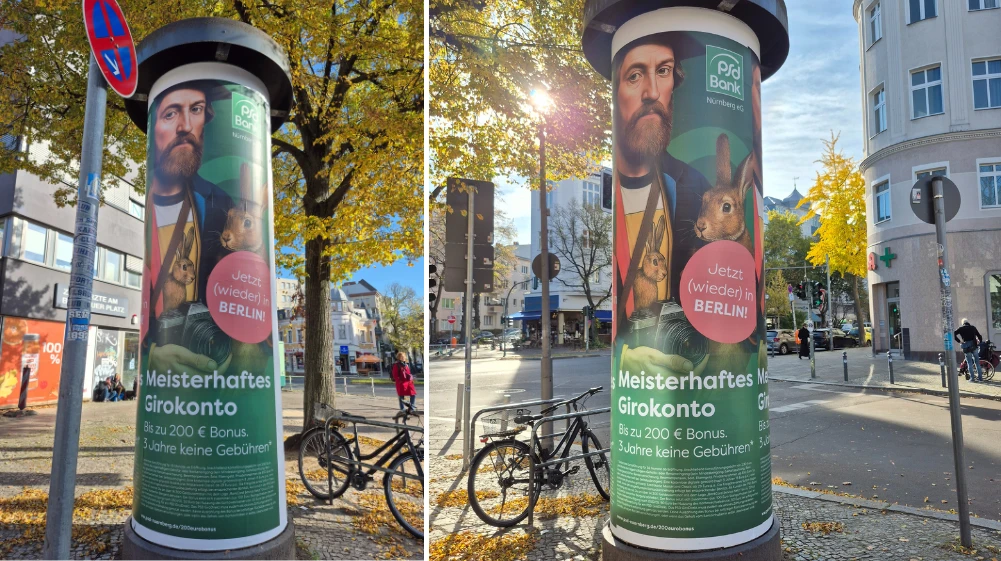
Sometimes, it doesn’t take a full-blown campaign to make an impression. That’s exactly what PSD Bank thought when looking for a distinctive way to highlight its Steglitz office. And so, they decided to put the advertising pillars in their catchment area to the test.
Around the Handjerystraße location, several media options made it to the shortlist: street clocks, lamppost ads, exclusive pillars, and large-format billboards. Each was evaluated strategically in relation to the site. While the clock ads continue to turn reliably year after year, the exclusive advertising pillar ultimately took gold for PSD Bank and deservedly so.
The pillar has a strong and confident presence in the streetscape. Standing right on the sidewalk, it meets every passerby at eye level. Pedestrians, cyclists, and even drivers can’t miss the large, striking visuals. It can’t be blocked by parked cars or hidden by trees: it’s always right there, front and center.
Each pillar can be booked individually, and only the locations that truly fit the concept make it to the final round. Sometimes, a large billboard sneaks in at the last minute and wins the internal race. Healthy competition keeps the advertising world vibrant, after all.
Pillars, like billboards, are booked in ten-day cycles. That means fresh creative can be added every ten days, keeping the content relevant and exciting for people in the area. Every update brings new energy: a fresh message, a new design, a different reason to stop and look. Compared to year-round media that never change, the pillar offers unbeatable flexibility and liveliness.
Exclusive pillars also stand out for another reason: they have no direct competition. There’s no second pillar beside them, no neighboring poster crowding the view. The message doesn’t have to shout to be seen — it simply commands attention by presence alone.
Poster formats are flexible, too. One period might showcase a bold 8/1 design covering the entire pillar, while the next could feature a colorful checkerboard of A1 posters for a playful variety. Berlin stands for diversity and the pillar reflects that spirit perfectly. It evolves with the seasons and stories: open house events, rate changes, new opening hours, or special offers.
In that way, the pillar becomes more than just an ad space … it’s a street-level ambassador for the brand. We wish PSD Bank every success with its new (sales) colleague out there on the streets, connecting with the community day after day.
Black Friday Booster: How to Boost Sales with Outdoor Advertising
Do you also feel like the Black Friday season starts earlier every year? Just as the first leaves fall, the first sales offers appear on every channel. The challenge for you as a marketing manager or brand manager is huge: how do you stand out from this noise and make sure your offer is seen and used?
The answer often lies where your competition hesitates: in the unmissable world of Out-of-Home (OOH) advertising. Traditional and digital billboards can put your Black Friday offer in the spotlight right before the purchase decision. Forget overcrowded inboxes! Here’s how you can rock Black Friday and maximize sales with outdoor advertising.
Why OOH is the Turbo for Your Black Friday Sales
During the hectic pre-Christmas period, attention is the hardest currency. Online ads are often skipped or blocked, but a large billboard or Digital-Out-of-Home (DOOH) screen is hard to miss.
Advantages of outdoor advertising for Black Friday:
Reach: OOH reaches commuters, shoppers, and pedestrians – the people most likely to head to stores or shop online.
Proximity to purchase: Strategically place city-light posters or digital screens near stores or high-traffic shopping areas to strengthen the impulse to buy.
High credibility: Outdoor advertising is perceived as trustworthy and widely accepted.
The Tactic: Classic Meets Digital for Maximum Impact
Black Friday is short and intense. This calls for a campaign that scales quickly and reacts flexibly. Different OOH formats each bring their strengths:
1.The Classic Anchor: Billboard Advertising for Presence
Large-format and city-light posters are the backbone. They build awareness ahead of the Black Friday weekend and anchor your message in consumers’ minds. This type of advertising ensures base reach and generates anticipation – creating a mental anchor for your brand before the discount frenzy begins.
2. The Flexible Weapon: Digital-Out-of-Home (DOOH) and Programmatic
Here’s where the magic of the media mix comes into play. Digital advertising at train stations, shopping streets, or main roads allows you to display deals in real time, without production delays.
Time-of-day targeting: In the morning, reach commuters and professionals starting their day, while in the evening, target employees, young adults, and people out for leisure activities such as concerts or events.
Programmatic Out-of-Home: With Programmatic Out-of-Home (pDOOH), you can even use audience data to show your message only when your customers are most likely to pass by. Flexible and efficient doesn’t get any better than this!
Black Friday isn’t a game of chance; it’s a race for attention. To boost sales, rely on a medium that guarantees visibility and can guide customers to the point of purchase.
Outdoor advertising is a powerful marketing tool. Combine classic presence with digital flexibility to make your Black Friday deals even more successful.
Ready for Black Friday Advertising Success?
At wtm aussenwerbung, we know the best locations and the smartest (programmatic) DOOH strategies to make your Black Friday campaign a success. Let’s find the perfect spot for your deal! Contact us for a free consultation before the best ad spaces are gone.
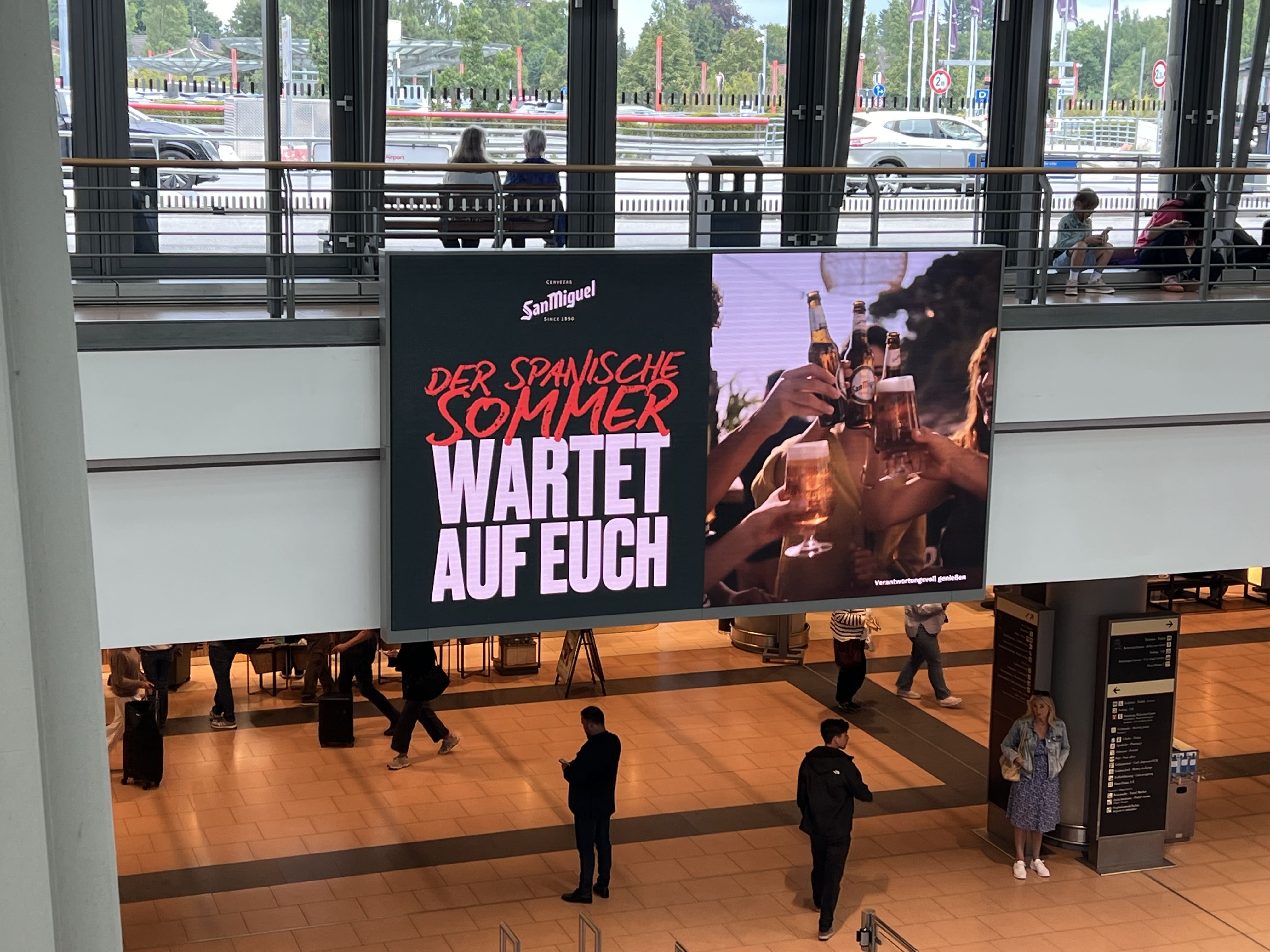
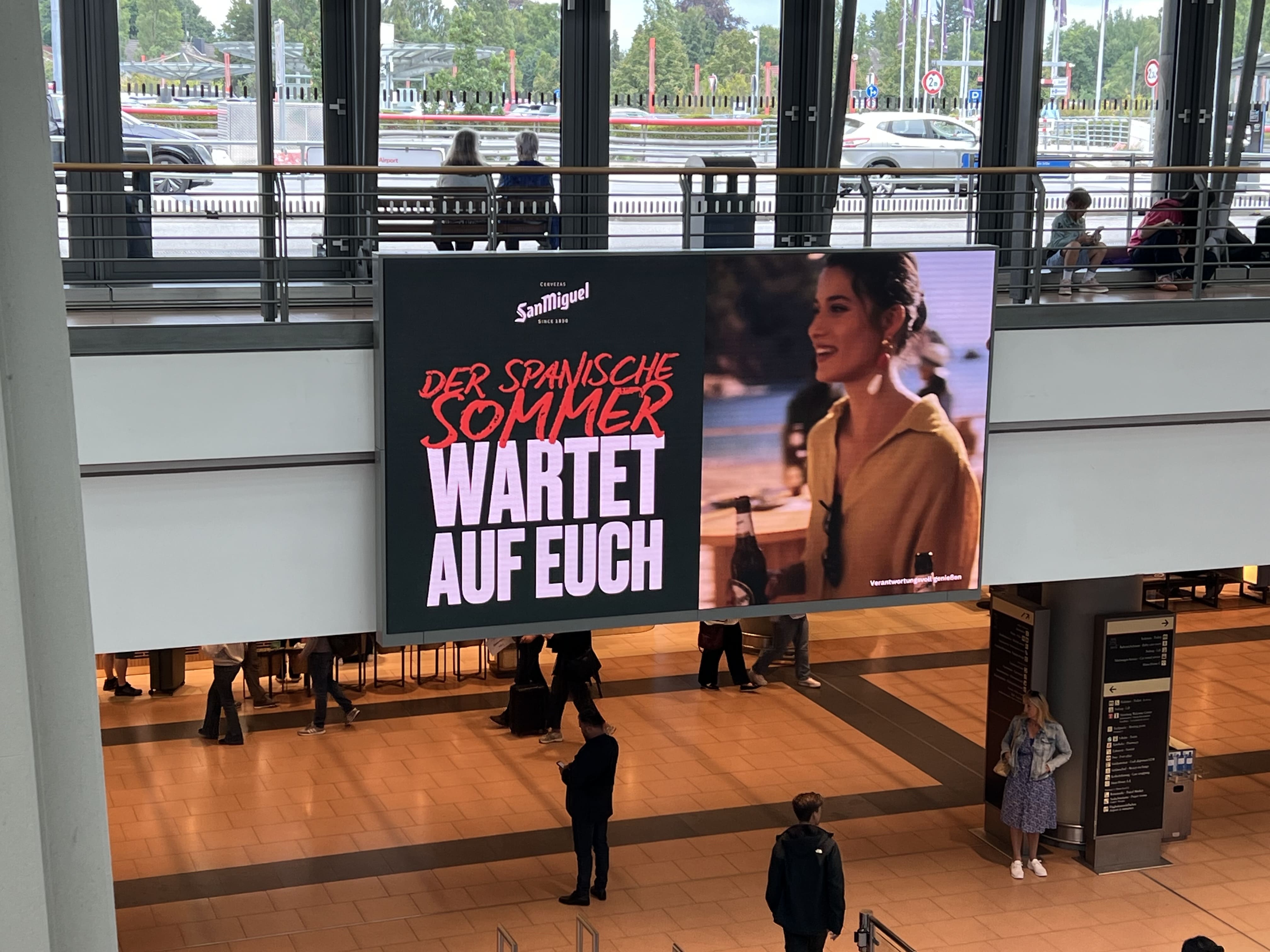
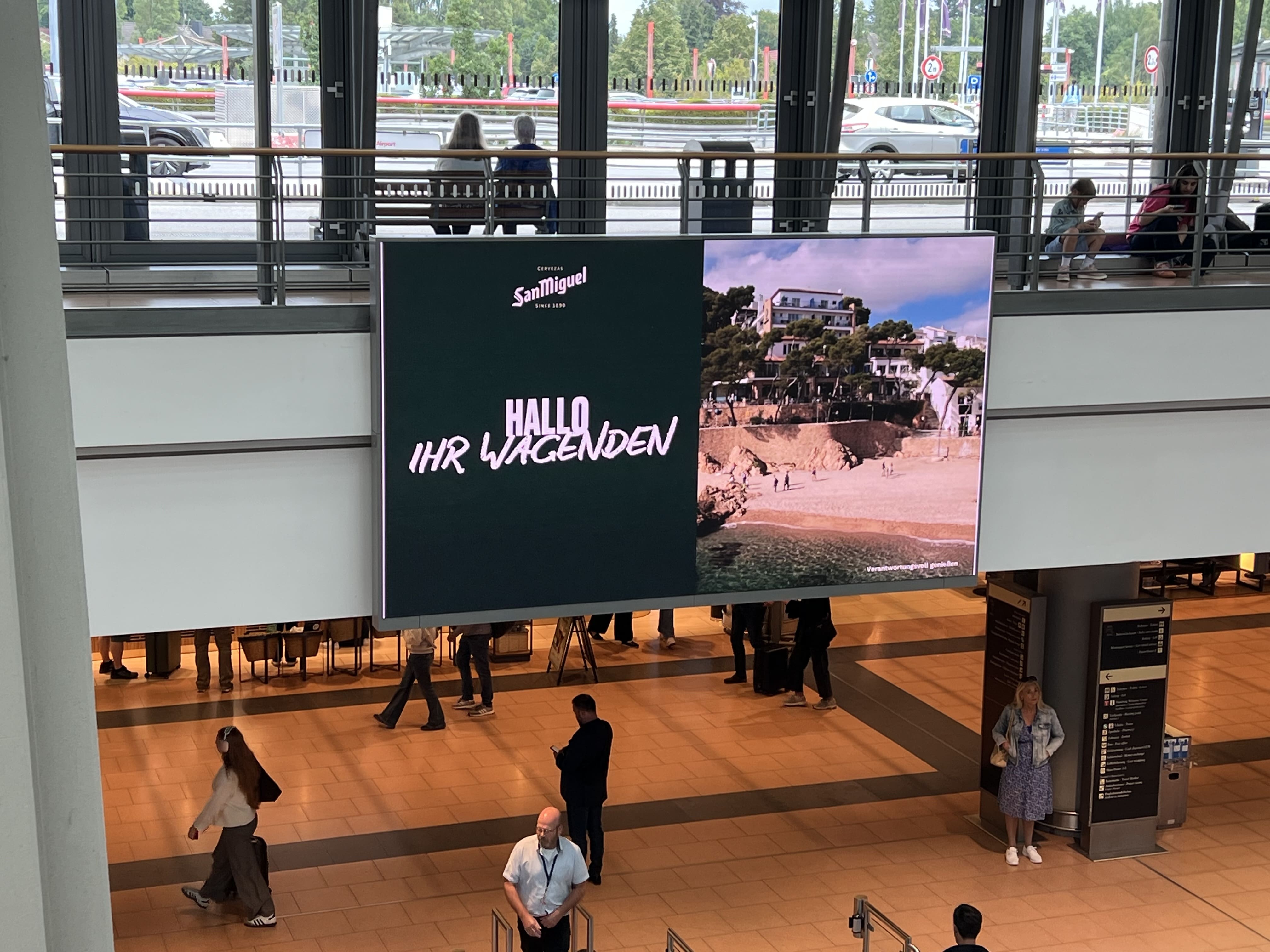
Protagonist: San Miguel, the well-known beer from Spain
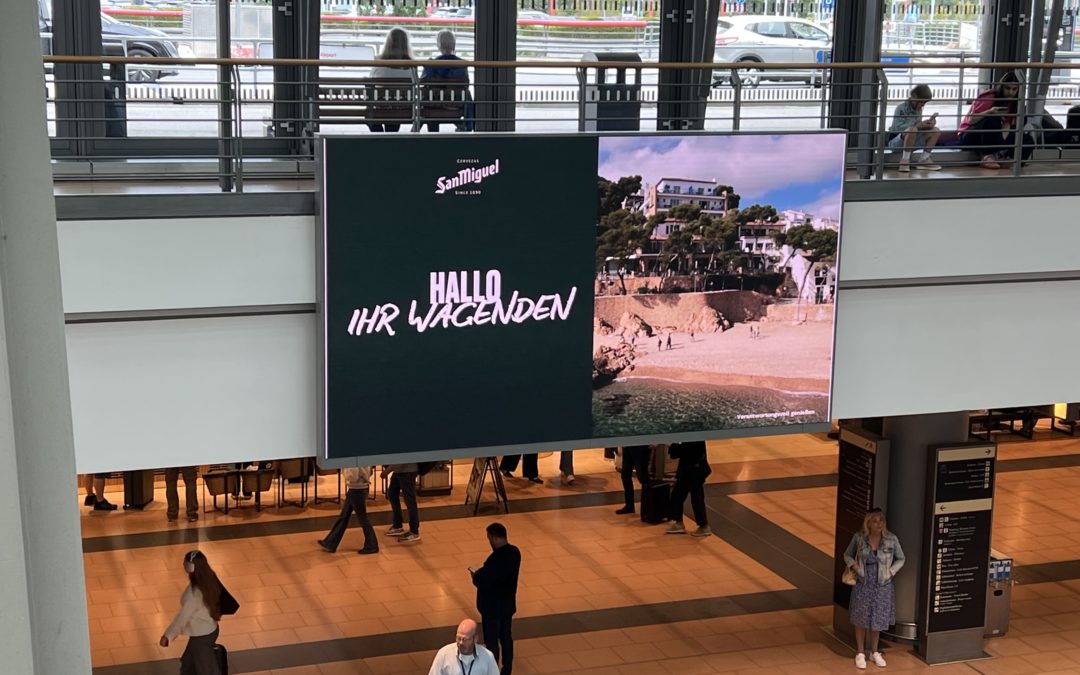
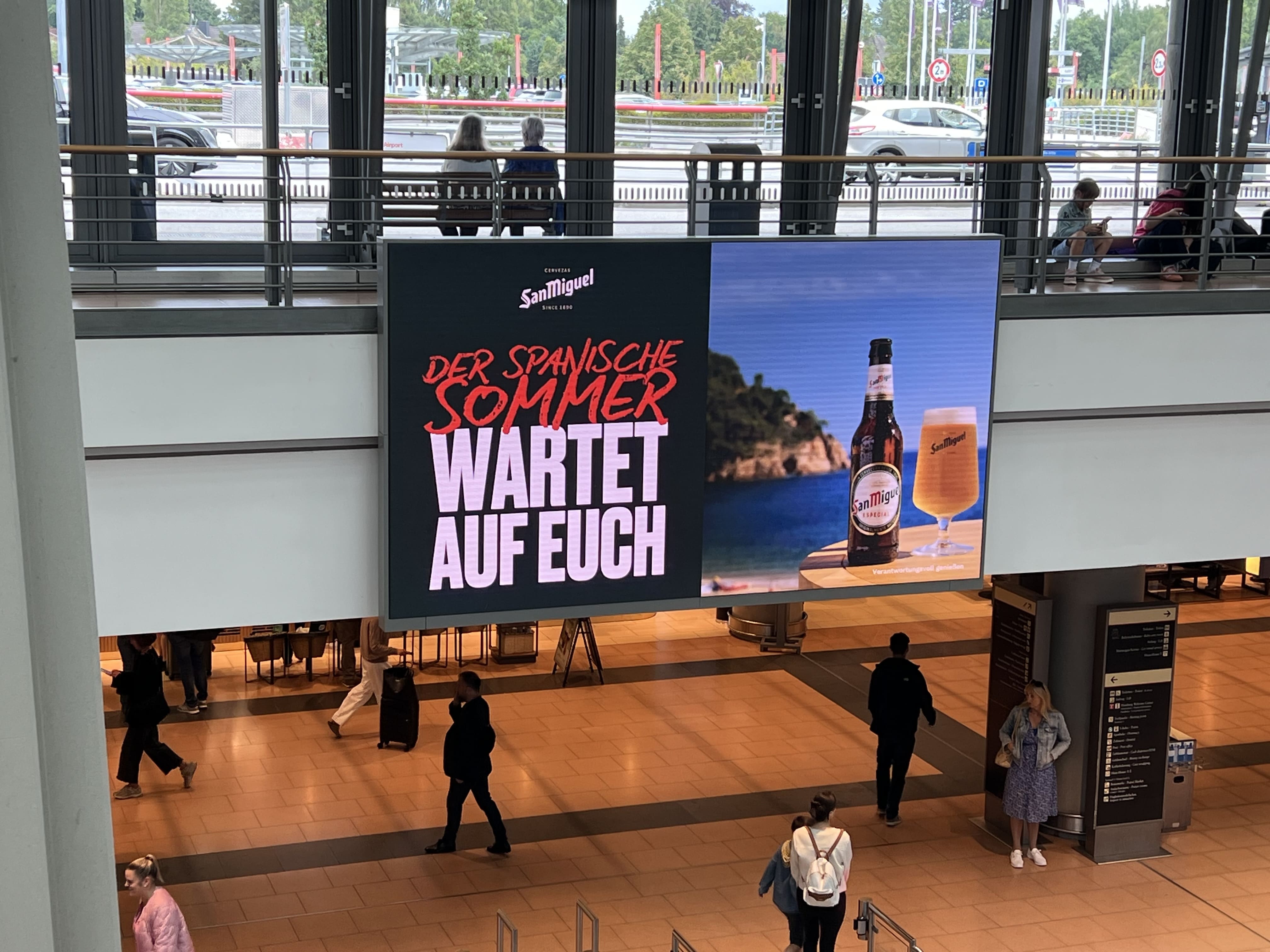
Our client booked three flights at Hamburg Airport. During the first week, San Miguel presented itself on a digital board with fast-moving images, and in the following week, a 10-second commercial whetted viewers’ appetite for the beer.
San Miguel made a conscious decision to use digital media. Brilliant images and straightforward shipping are just some of the many advantages. Digital media in outdoor advertising offer more flexibility (for example, new advertising content every day) and better targeting of the target group.
Advantages of digital out-of-home advertising:
• Flexibility:
Digital media make it possible to adapt content in a very short time.
• Target group appeal:
By using data and targeting options, advertising messages can be played to specific target groups. For example, to travelers at airports and to sports-minded target groups at gyms.
• Eye-catching:
Digital media achieve a higher advertising impact.
• Interactivity:
Some digital media offer interaction.
• Around the globe:
Digital formats are easy to use internationally. Traditional paper formats have made it difficult for brands to implement campaigns quickly and consistently in multiple countries. No printing of posters—San Miguel also benefits from this.
We look forward to the next San Miguel Week in Hamburg.
The new offices are ready and the move is planned for next month? The new company sign has been ordered, but there are no other signs for the new office.
What can I do to put my office in the spotlight? What realization times do I need to take into account? What costs will I have to pay?
There are a number of simple but effective advertising options right on your doorstep. Of course, you have already commissioned an advertising technician to create an eye-catching company sign. This is part of the office’s first business card. Don’t stop at the door, but go a few steps further in your mind. In the stairwell, signs point the way (alternatively in the elevator) to the second floor, at the door another sign informs which room offers which service and ceiling hangers serve as a signposting system in the entrance area of your office. A well thought-out concept leaves a lasting impression. Don’t forget to use the office windows for external advertising. Window films with your logo will shine for many meters and especially in the evening hours you will enjoy the illumination of the offices.
Lead time: 3 weeks
Costs: from € 2,000.00 – depending on design and effort.
Advertising in the marketing zone of clients and potentially interested parties not only draws attention to the new company headquarters, but also to the company as a whole. Which district do my client come from and how will they get to me? You quickly come to the point that, on the one hand, local public transport plays an important role. In urban areas, more and more people are doing without a driver’s license or their own car.
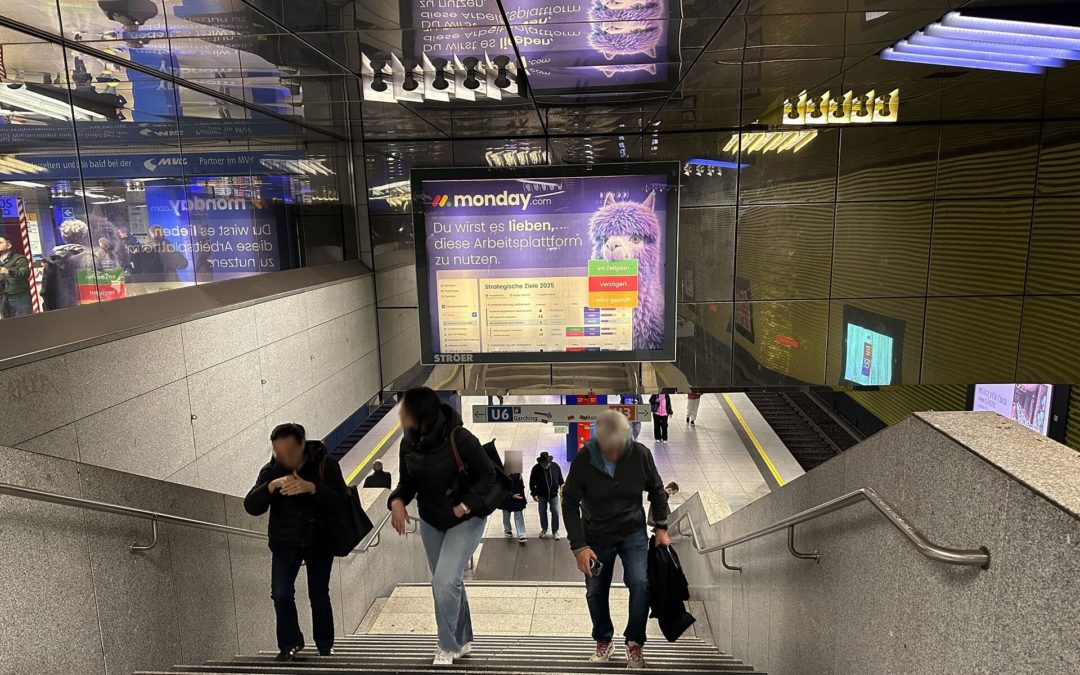
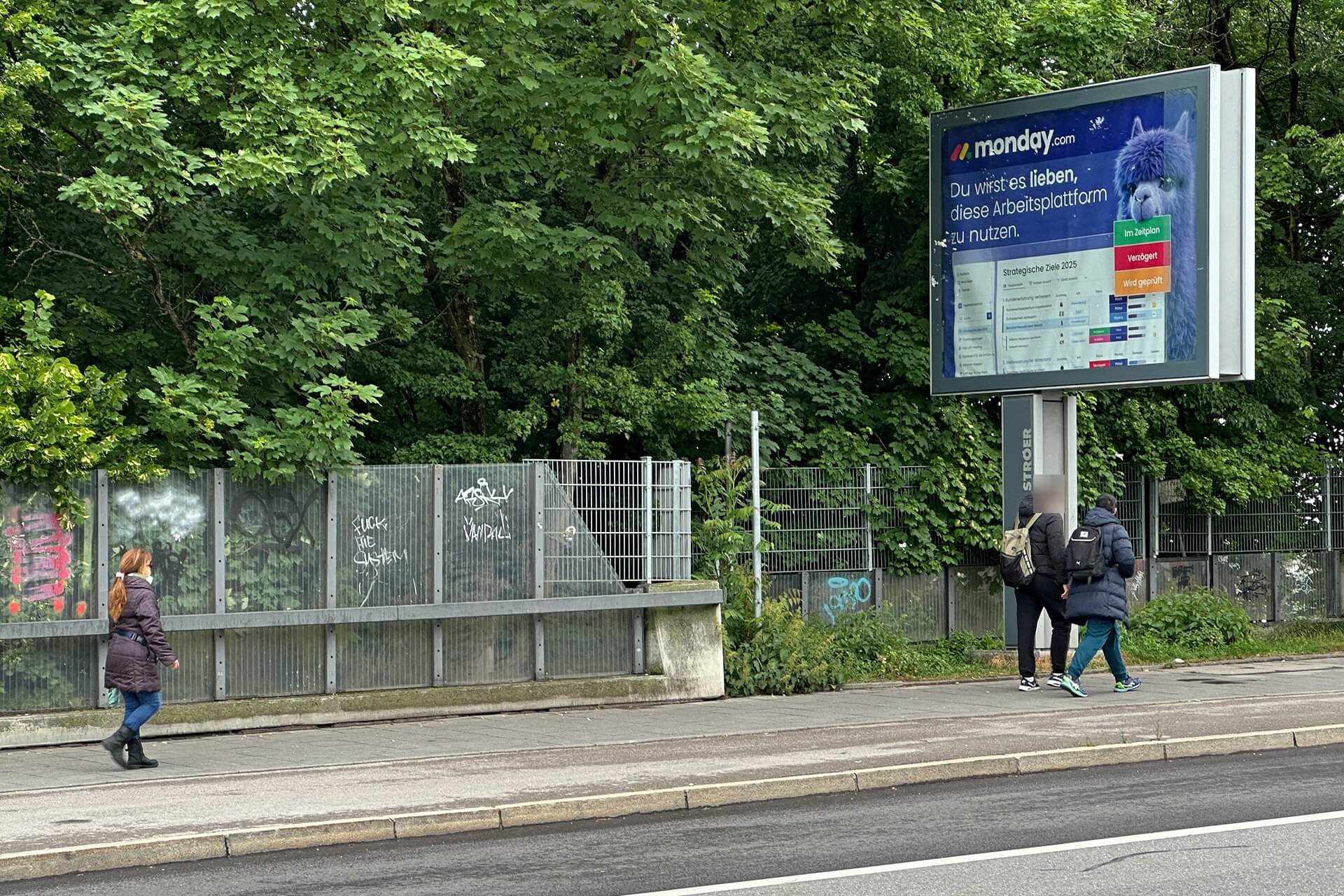
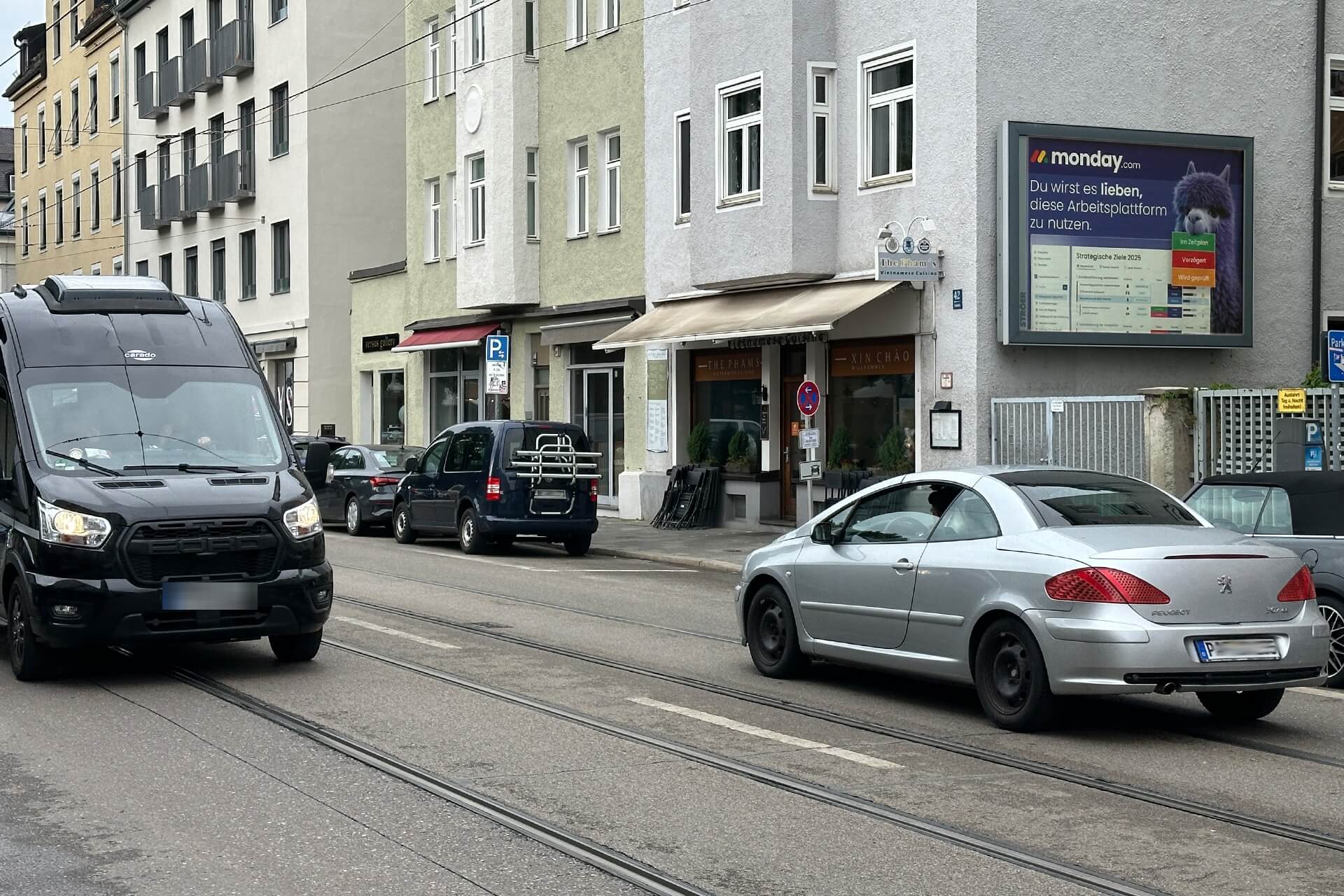
Our client Monday.com has opted for public transportation and road hubs for its new opening. Monday.com offers work platforms for the professional sector so that all employees can work together efficiently. At the same time, information such as projects and statistics are synchronized in real time. Decision-makers in companies are often found in company cars. That’s why the road was a must in campaign planning.
City Light Boards are positioned at highly frequented locations in road traffic and tower over all natural obstacles such as parked cars. In Munich, this included Wilhelm-Hale-Straße, which is an important tangent.
Advertising at hot spots
A third and final consideration can be the places where the target group likes to spend a lot of time. For example, fitness studios, cinemas, neighborhoods. Booking advertising space in the direct living environment of the target group ensures a high level of attention and a positive association with the advertised product or service. These ambient media are often used in combination with classic advertising measures.
In our case, it was the large space in a Munich “nightlife district”. Cosy pubs with live music characterize this street. This is exactly where advertising pays off.
Is a new opening on your agenda? We would be happy to launch a campaign.
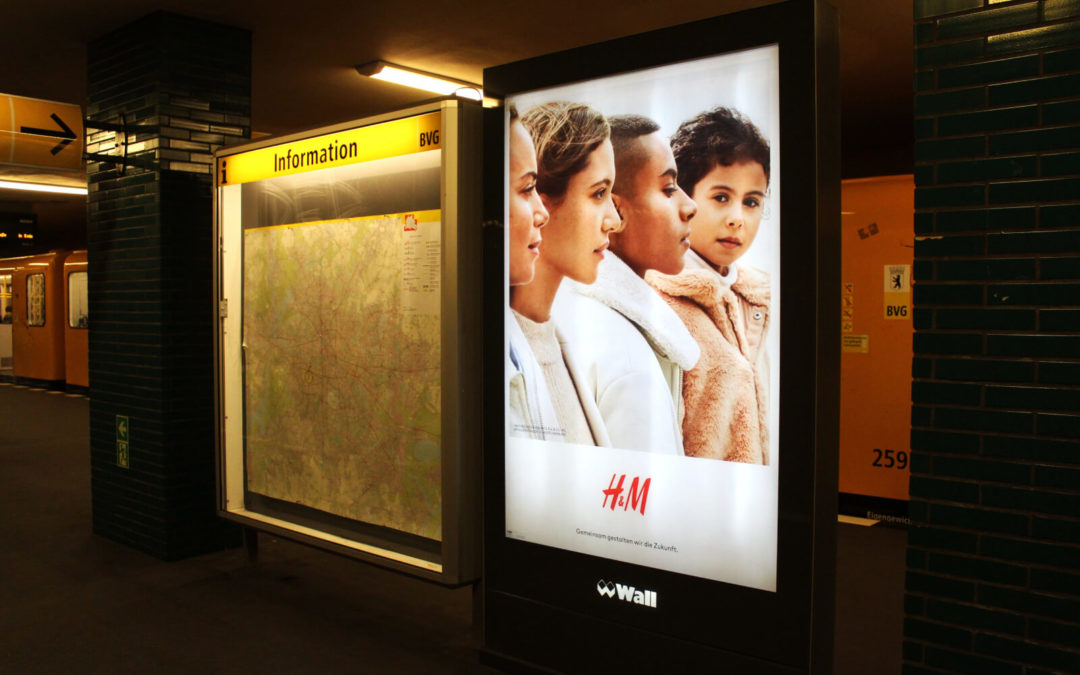
Have you ever sat in the Berlin subway and passed the time to your destination by watching Berlin passenger television? You are not alone! Millions of passengers travel on the U-Bahn every day and catch up on Berlin and the world via these digital screens.
But have you ever asked yourself, how can I advertise on the Berlin passenger television? How does it work? And how much does it actually cost? No problem, here are the answers on a silver platter.
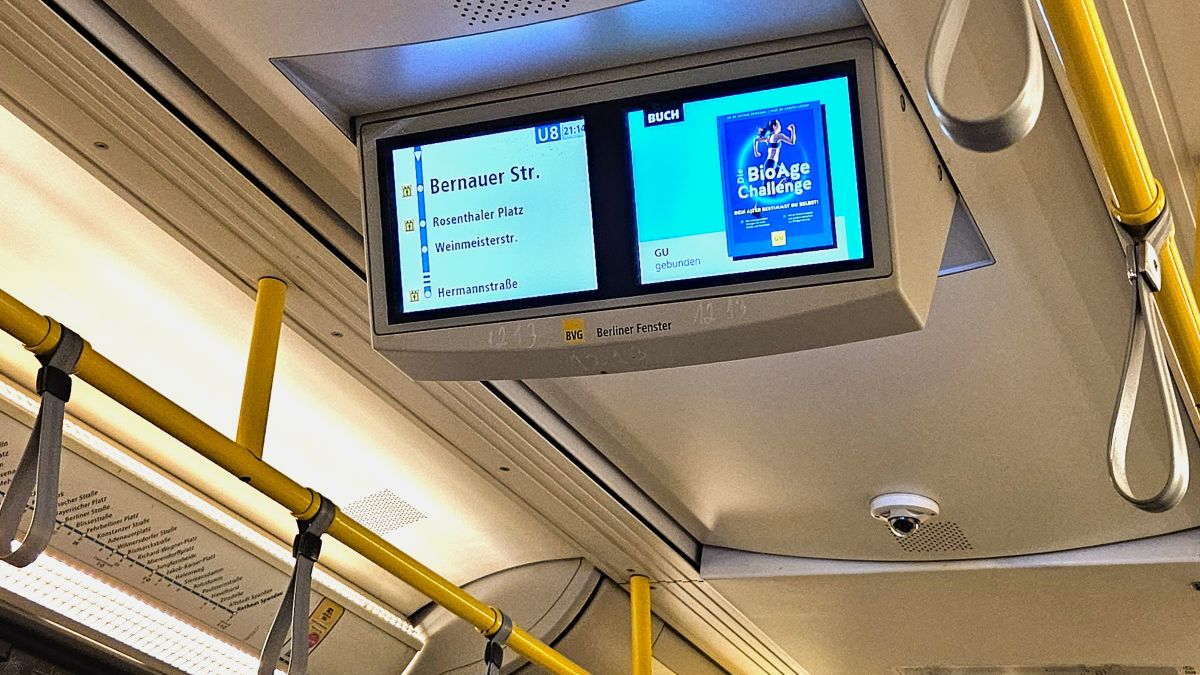
The Berliner Fenster (German for Berlin window) is a digital information and entertainment system in the subway cars of Berlin’s public transportation system. It is also known as the passenger television of the U-Bahn. Passengers regularly receive the latest news, weather forecasts, event tips and advertising content via integrated screens. The monitors are mounted at the ends of the vehicles or centrally above the central aisle. This allows the screens to be seen by as many people as possible.
Key features:
Equipment: Two monitors per unit. Information on the following stations and transfer options is displayed on the left. A mixed entertainment program is shown on the right.
Topic areas: News (Tagesspiegel, rbb), weather, culture, sport, event information and advertising
Program length: About 15 minutes, followed by a repeat
Language range: Mainly German, occasionally multilingual contributions
Digital! The Berliner Fenster is the only digital format for transport advertising among the otherwise predominantly analog interior advertising foils.
Since its introduction in 2001, the Berliner Fenster has become an integral part of local public transport and reaches around 1.5 million Berliners and tourists every day. In addition to providing information, it plays an important role as an advertising space for companies and institutions.
How can the passenger television be booked?
Customers enjoy a great deal of freedom and flexibility when booking the Berlin Passenger television. We will go through these freedoms in brief here:
1) How long is your clip?
You have the option of having a clip of various lengths included in the program. The standard length is 10 seconds. But you can also create 15, 20, 25 or 30 second clips.
2) Dynamic or still image?
You are free to choose whether your clip is a video (moving images) or a still image. Or you can combine both. The choice is yours.
3) When would you like to broadcast?
You are completely free to decide on which days and at what times your commercial is broadcasted. We have a planning tool with a weekly view for this purpose. The broadcast is from 4 a.m. to midnight and the day is divided into 2-hour time slots. So, you can decide on which day and in which 2-hour blocks you would like to be broadcast.
4) How often would you like to be played out?
In addition to selecting the time slots in which your clip is to be played, you can also choose whether it is to be shown 8, 16 or 24 times in this time slot. Of course, there is also the option of being played 0 times in some 2-hour blocks.
Here in this booking example, you can see that we have booked the various time slots with more or fewer repetitions. On Tuesday we broadcast 8 times per 2-hour time slot, on Thursday not at all.
This flexible allocation allows you to decide exactly when you want to broadcast and thus reach your target group and use your budget wisely.
How much does the Berliner Fenster cost?
With a CPM (cost per thousand contacts) of just over €1, the Berliner Fenster is very affordable! The final costs depend on the length of the clip and the desired number of repetitions, but the CPM remains almost unchanged around 1.06€.
In our booking example (see above), the advertiser receives 400 playouts of 10 seconds each, spread over a week. The media price is €12,608. This achieves 11,836,668 gross contacts, which corresponds to a CPM (thousand contact price) of just €1.07. An almost unbeatable price-performance ratio!
Would you like a customized offer? No problem. Just tell me how long your clip is and when and how often you would like to play it. I will then prepare the offer accordingly.
Why should you book digital interior ads on the passenger TV?
Digital interior advertising on the Berlin passenger TV is a great way to achieve visibility for your brand. We have already highlighted some aspects. Here we summarize the positive aspects once again in short:
High reach! Berlin Passenger TV reaches 1.5 million people every day!
Unbeatable value for money! With a CPM of just €1, the Berliner Fenster is a great and affordable medium for a small buck.
Entertainment factor
Passengers are looking for distraction during the long journey on the U-Bahn. They can hardly look out of the window in the tunnel. The Berliner Fenster is therefore a welcome distraction.
High appeal and relevance
By embedding the advertising clips in an editorial program, the commercials are not perceived as distracting. The relevance is further enhanced by Berlin-related features such as the weather, politics and events.
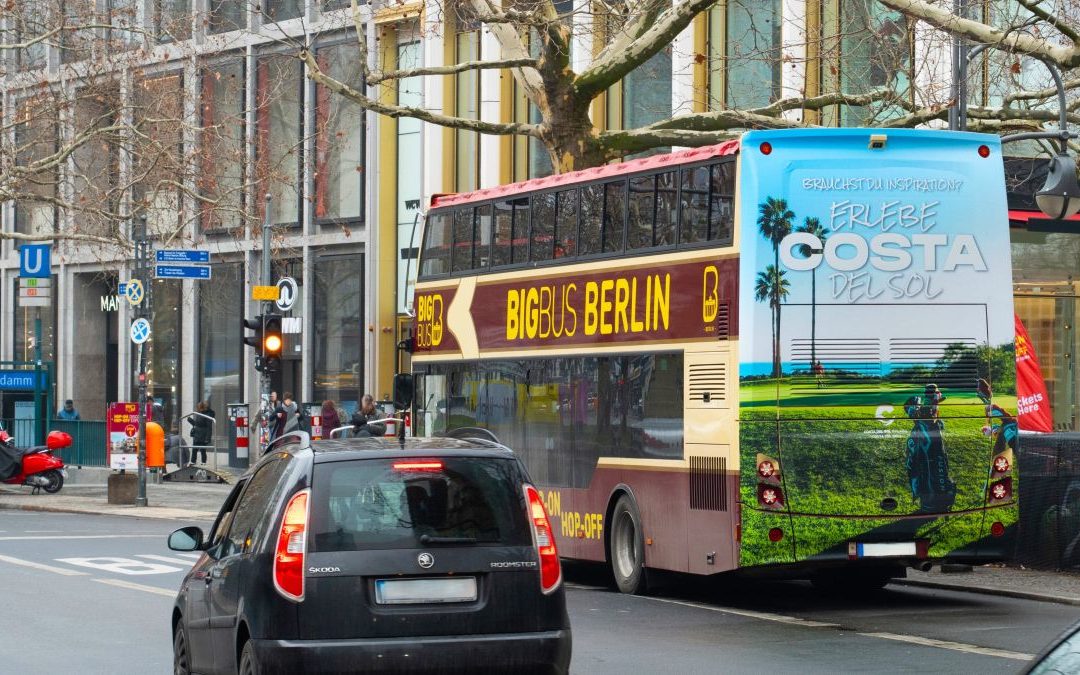
It’s hard to imagine Berlin without them. The sightseeing buses travel their route through Berlin’s city center every day, taking in the sights and highlights of the city. But that’s not all. On the huge back of the double-decker bus, they offer a large advertising space in Mega Rear format. Bus advertising on sightseeing buses is a great marketing strategy to make your brand visible in the city center of Berlin.
Book the Mega Rear format on sightseeing buses now and be the main attraction of the sightseeing bus tour! Thanks to its size, the Mega Rear attracts the attention of everyone in traffic and reaches countless people in Berlin’s city center every day. The fixed route allows you to advertise in an even more targeted way, as only fixed locations are visited.
Tour Berlin now with your campaign on sightseeing buses and secure the last-minute deal for May!
Sightseeing bus advertising offer: 25% 35% and 45% discount au Media
How much discount would you like? We have prepared an exclusive graduated offer for you here: 1, 3 or 5 sightseeing buses.