Targeted outdoor advertising around trade fairs: Create a strong presence!

Targeted outdoor advertising around trade fairs: Create a strong presence!

At events, congresses and trade fairs, advertisers can benefit not only from increased contact numbers, but especially from the quality of the contacts. With targeted booking of all advertising media around the event location, advertisers can address their target audience before they are exposed to the flood of information from all exhibitors at the event location. Therefore, outdoor advertising at trade fairs and congresses reduces wastage and ensures a strong presence around the exhibition center.

Take the ITB in Berlin, for example. With more than 160,000 visitors and 10,000 exhibitors annually, the ITB is the world’s leading trade fair for the tourism industry. Over 180 countries, countless cities, hotels, travel companies, etc. compete for the favor of visitors and buyers in the 40+ halls of Messe Berlin. To stand out in this jungle of impressions is not easy. This makes it all the more important to be visible outside the exhibition grounds.

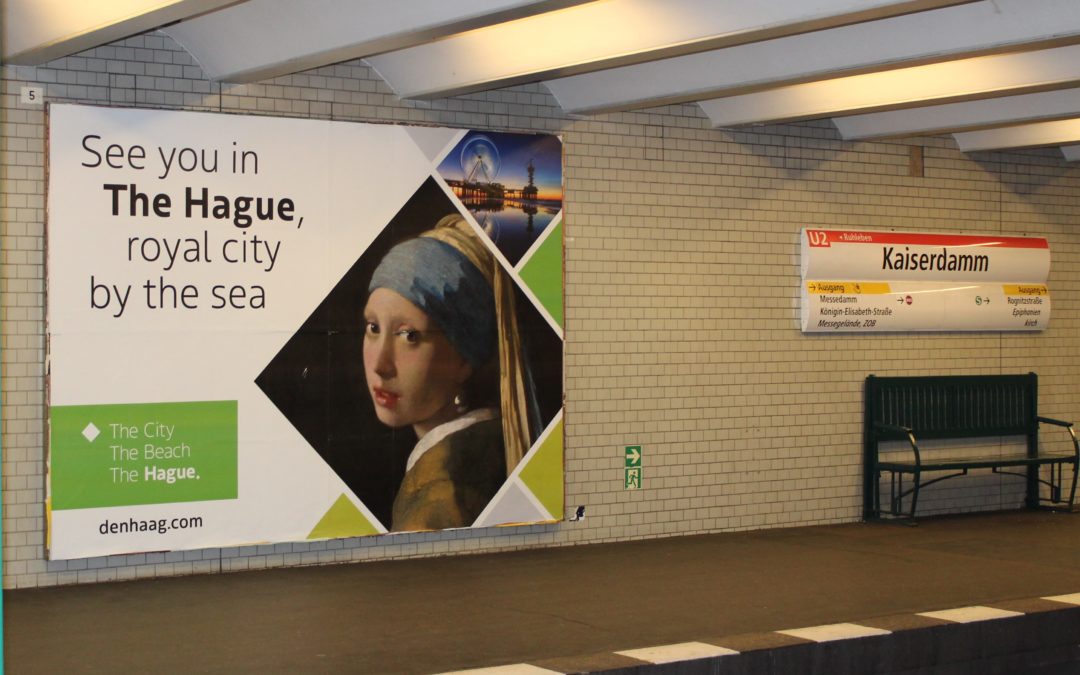
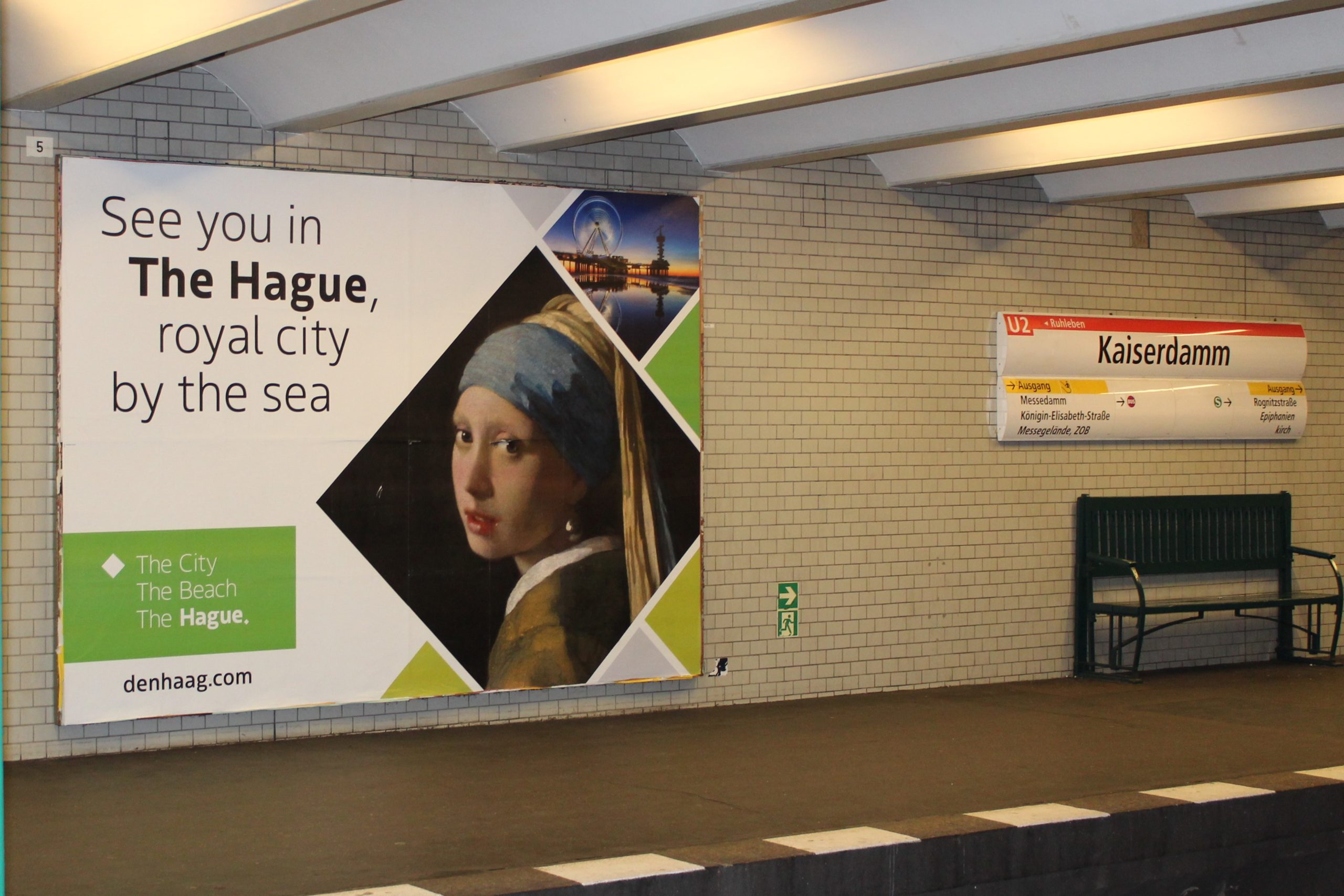
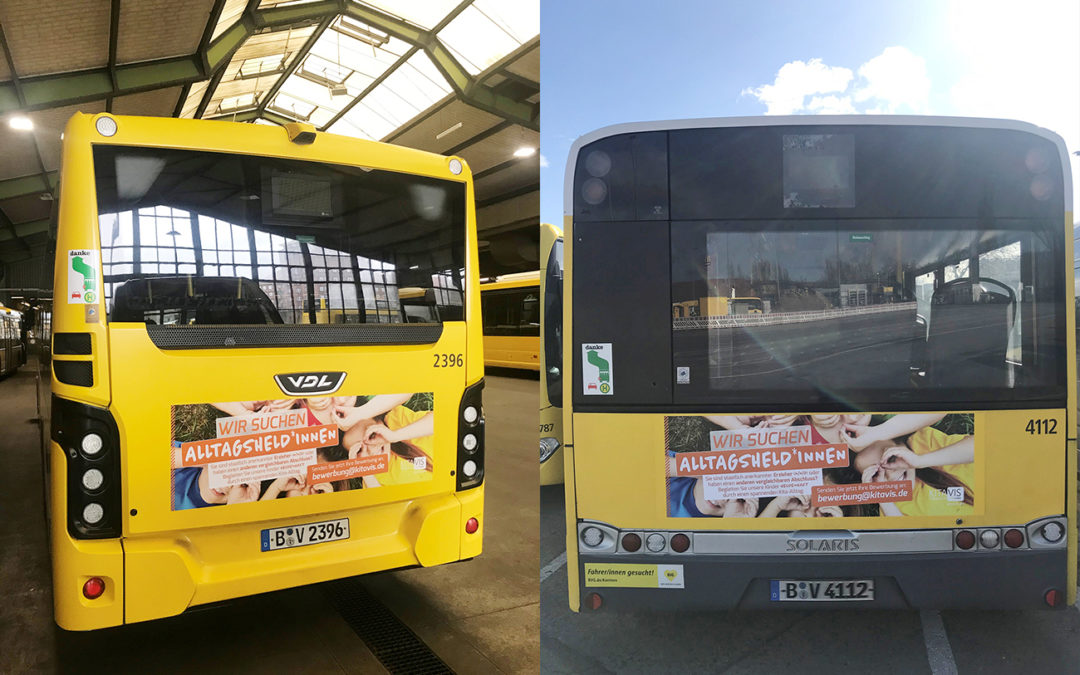
There are several strategically placed advertising media around the exhibition grounds, which can be selected individually and booked for a trade fair-related advertising campaign. As parking spaces around the exhibition grounds are rare, most visitors and exhibitors come by public transport and taxis. At the nearest stations of the S-Bahn Messe Nord and Messe Süd, as well as the underground station Kaiserdamm, large billboards can be booked. At large intersections, there are rotating City Light columns in which 3 advertisers can place their upright advertising messages behind glass. Furthermore, at important traffic tangents there are large, rotating City Light Boards and the digital City Light Boards, which broadcast your messages clearly visible even in bad weather. The advertising concentration is at its highest when all direct advertising media are occupied. In addition, taxis and busses can also be branded to increase the advertising pressure.

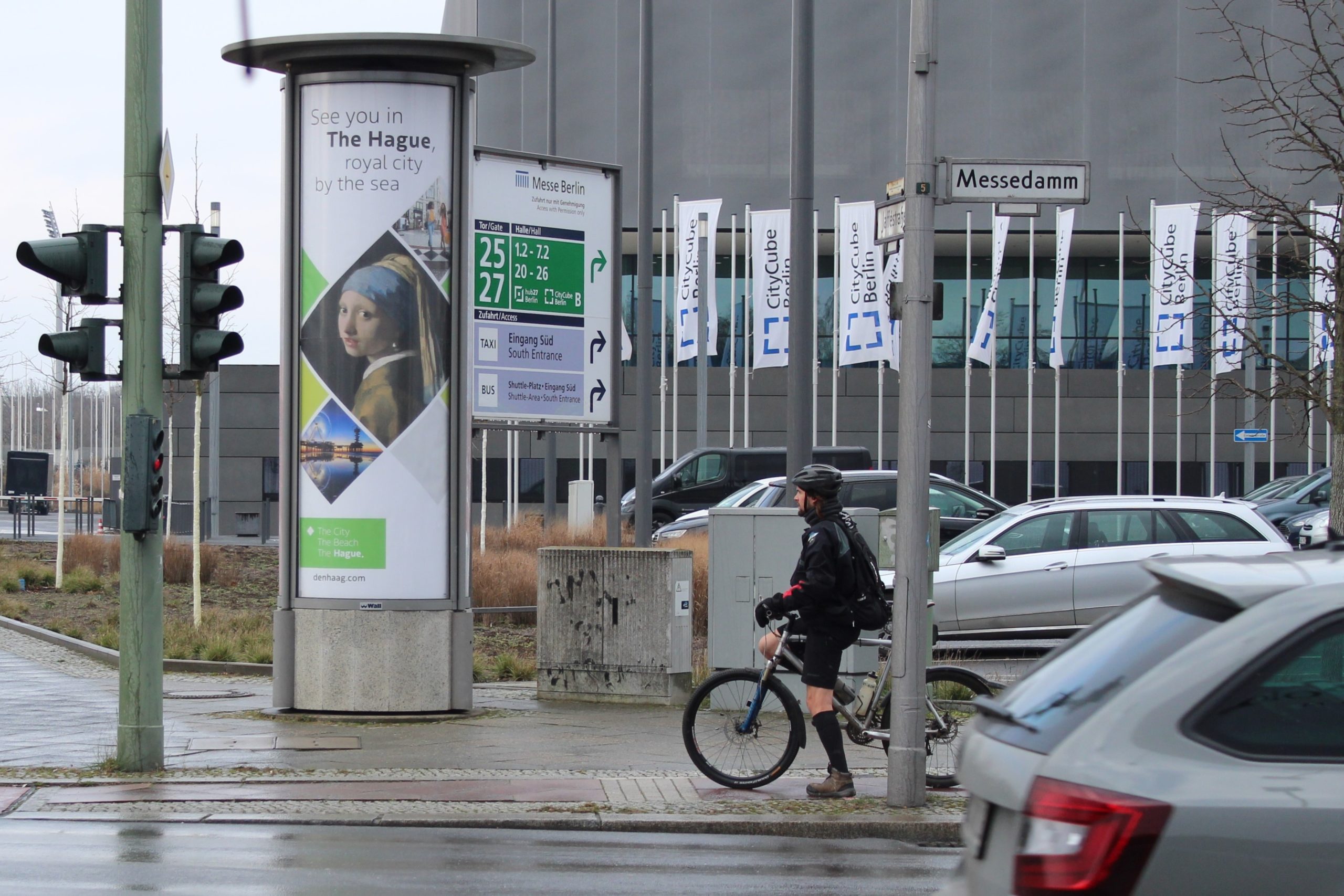
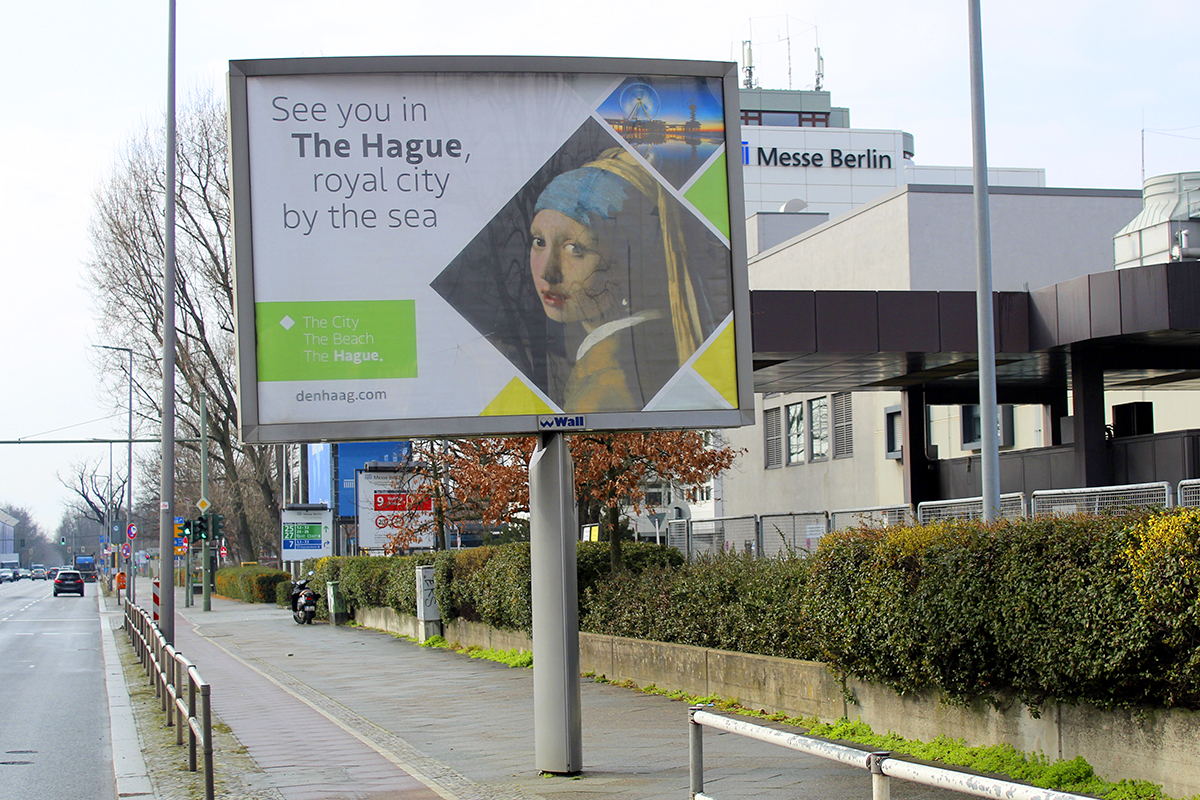
Here, as an example, the campaign of the city of The Hague for the ITB.

Outdoor Advertising 2019 – a strong year!

Outdoor Advertising 2019 – a strong year!

out of home Umsatz

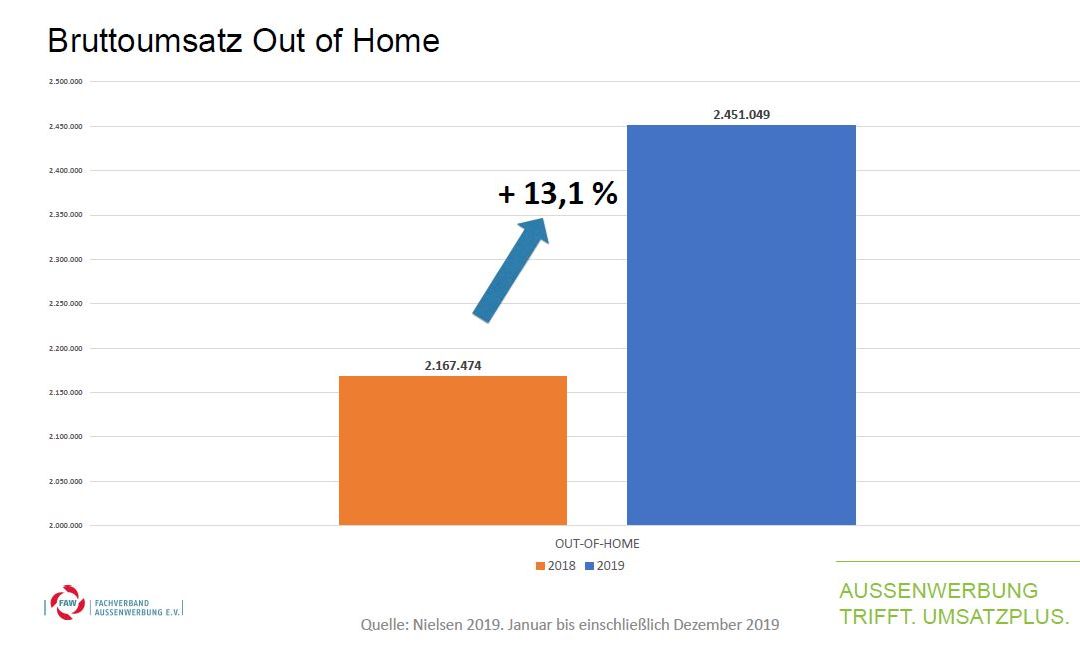
The past year has been, so far, the highest-selling year in the industry. The gross revenue rose about 13.1% to almost 2.5 Billion Euros. In comparison to outdoor advertising, the standard media forms lost their share. The outdoor advertising industry expanded their market share to solid 7.5%. This positive trend is spread between the outdoor media, from posters, over transport media, to ambient media. They are the victors of 2019. This annual result was formed particularly in December. Amazon alone invested one fifth of their annual budget in the last month of the year. Due to increased mobility and modified use of media, outdoor advertising will experience further growth in the coming years.  

Great results for digital media

Great results for digital media

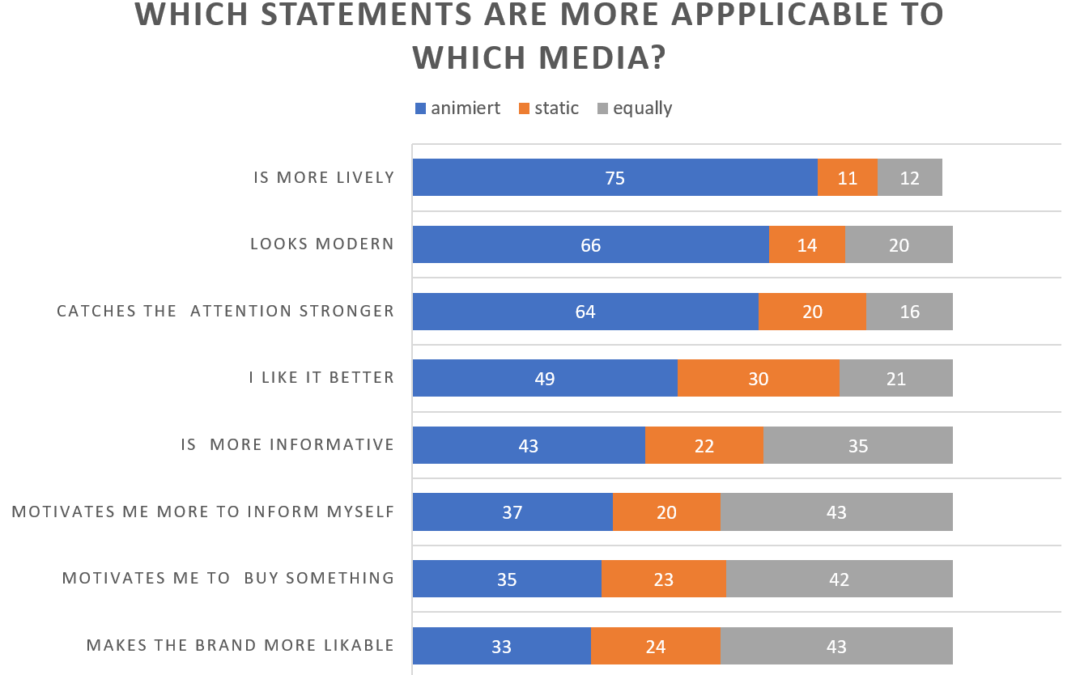
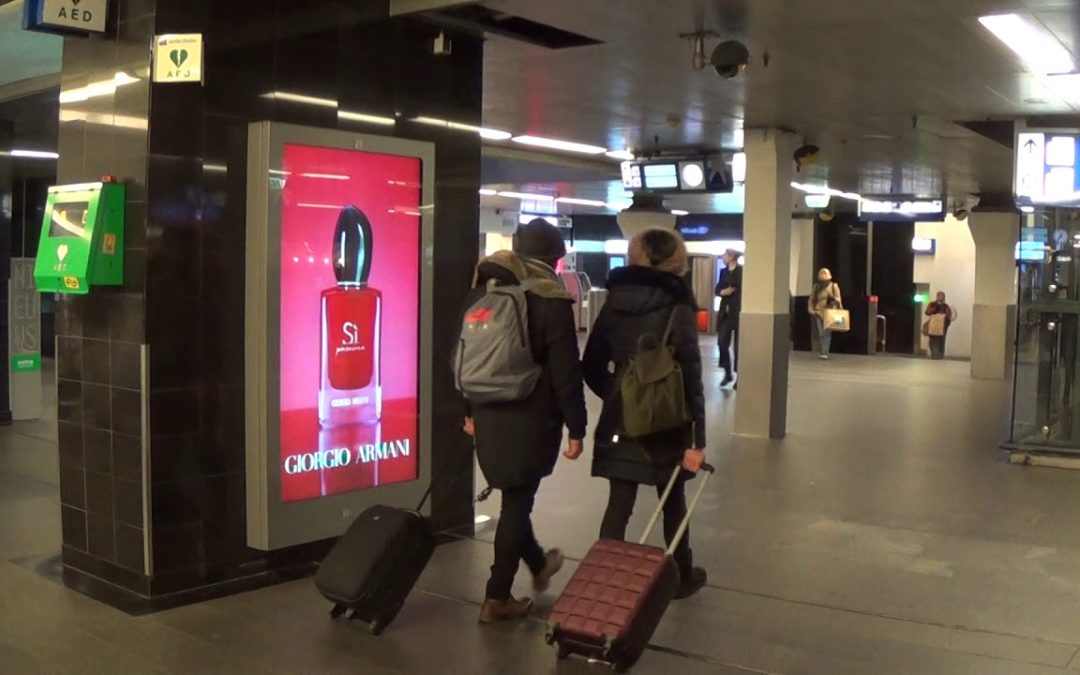
 In comparison to traditional analogue media, digital media perform much better. Digital city light posters and city light boards stand out for their high efficiency. They catch the attention of passers-by efficiently and score high sympathy points. When advertising on digital citylight poster networks, the gross coverage is about 20% higher than with analogue networks. The high-brilliance screen and the moving images are an effective eye-catcher. Our client Taiwan Trade Center values this positive effect of the digital screens. For the Berlin Marathon, they will have a digital runner join the crowd for 10 seconds at a time. If you are interested, we can send you an example spot. Just send us an email: schwarz@wtm-aussenwerbung.de

The evolution of digital billboards

The evolution of digital billboards

[featured-video-plus]
The analog city light posters are superior to their predecessors “paper” by their brilliance for years. Backlighting achieves far more eye contact than non-illuminated or illuminated billboards.

The next milestone in the evolution of the city light poster is the digitalization and the associated technical possibilities. Especially for young target groups, moving images have a much more intensive effect than still images. But even people outside the target group cannot escape the video film: The eye automatically wanders there.

The mere reaching of the target group was yesterday, tomorrow digital posters can do much more. We are working at full speed on the next milestones.

For example interface design – modern face recognition

At the end of 2014, students of the Swedish media school Hyper Island demonstrated with a prototype for the Rijksmuseum in Amsterdam what graphic artists and technicians can do in the future. They linked the programming interface of the museum archive with a facial recognition program of the Dutch company Sightcorp. A young audience should be introduced to old master art from the museum, ideally by installing the system in digital city light posters at bus stops. The goal was to show the viewer the motif from the museum that fits his mood, gender and age.

The New Currency: The Eye Contact

What is already happening on the Internet in the background in terms of “traffic tracking” and “sentiment analysis” will expand to the physical world of digital media in the foreseeable future. What exactly is the viewer looking at? Combined with interface design, this makes it possible in principle to deliver and bill advertising to specific target groups without wastage. The British company Amscreen is a pioneer in this field. In the UK alone, Amscreen operates over 4,000 digital posters, mainly in supermarkets, railway station bookstores, petrol stations and doctors’ waiting rooms. There, the faces of the waiting people are evaluated in real time. If necessary, the design of the current campaign can be optimized to increase attention in the desired target group. Advertisers only pay for eye contact. Click or look will soon be a currency.

We look – the advertising looks back. And our face becomes the interface with which we step into another level of interaction, intentionally or unintentionally.


Just say thank you

Just say thank you

On a large number of billboards, friendly public service employees smile at us. They symbolize occupational groups such as the fire brigade, public order department, police and so on. The Berlin Senate hopes that the campaign will raise awareness of the achievements of these people, without whom it would be inconceivable to work together in the city. The campaign started with large areas at subway and S-Bahn stations. A few days later, passenger television in Berlin’s underground followed, introducing occupational groups every day and saying thank you for your personal commitment.

In mid-November, around 2,000 posters will be displayed on the advertising pillars in Berlin’s Straßenland and poster display cases at railway stations, thus intensifying this campaign. Then the time has come that one can rightly say: Outdoor advertising meets everyone. Of course, the meaning or the superfluousness is discussed contrary in the general public and in the media. And that’s a good thing, as the Berliner has been saying since 2001. If the campaign reaches a public discussion, then it has achieved its goal. When was the last time an advertising campaign was discussed?

New signs on lanterns

New signs on lanterns

The Berlin Senate has the right to re-tender and reassign advertising on light poles. New brooms now sweep back to the end of the year and bring us new formats, running times and terms of payment in addition to a different framework.

Prices for advertising signs on lampposts:
The prices remain unchanged in 2019. The non-illuminated pole sign costs € 996.00 per year and an illuminated sign € 1,740.00 per year. This is all net prices, VAT will be added. In the premium areas, a sign with lighting costs € 2,340.00 per year. However, Friedrichstrasse will be removed in the next few years because no advertising signs will be permitted on the two-armed lanterns. These signs will be removed at the beginning of 2019.

Contract periods for signs on light poles
The minimum booking time for unlit pole signs is 24 months. If you want to save production costs, you should opt for a three-year contract. The minimum term for illuminated signs is 36 months. The costs already include all ancillary costs such as the poster frame, approval costs, insurance, etc., so that the running times of 24 or 36 months are necessary to maintain the favourable tariff.

Motif Change
In the lantern – frame a Dibondplatte laminated with the advertising foil is hung up. This assembly principle makes a favorable motive change possible at a value of approximately € 120.00, and at any time and at short notice. You only send the printable PDF document and the production and assembly is done in a few days.

Discounts and conditions
The contracts always run on a calendar year basis. This is why we speak of annual rents, which have to be paid in advance in January. Quantity and time discounts on request.

How do you get advertising on lanterns?
Pole signs have an important function in your catchment area – they provide information about your location: 300 metres to the left.

Since not every light pole may be occupied with advertising, we look at your desired area and submit a proposal to you free of charge. From the locations you select the suitable lanterns and receive afterwards an individual offer. After your approval the approval procedure is initiated, which lasts between 4 and 6 weeks. During this time, the layouts can be created and the print data can be generated. Once the approval has been received, we go into production. After assembly you will receive your photos from us. And now we can only wish your advertising the best possible success.